Spotlight Now: OHA, DHHL outline Native Hawaiian housing plans
HONOLULU (HawaiiNewsNow) - Today’s episode of “Spotlight Now” focuses on housing plans for Native Hawaiian families and leadership at the Office of Hawaiian Affairs.
Developing 500 homes in Kakaʻako Makai
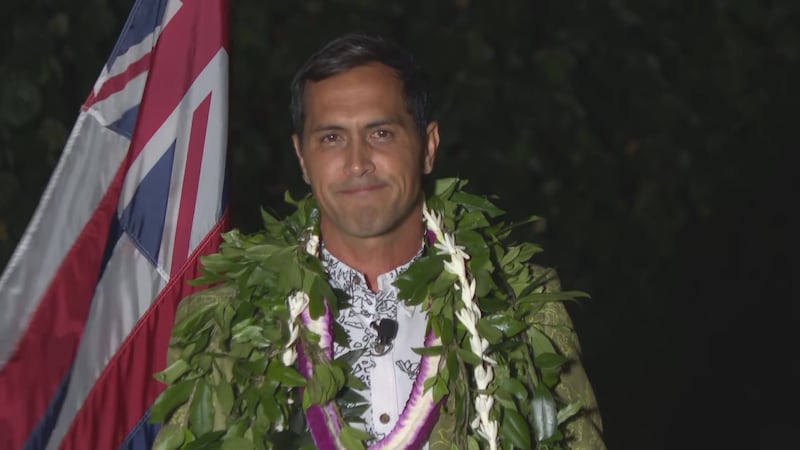
Office of Hawaiian Affairs Chair Kai Kahele said a partnership with the Department of Hawaiian Home Lands could bring about 500 leasehold homes for Native Hawaiian beneficiaries to Kakaʻako Makai.
Kahele said he began talking with DHHL Chair Kali Watson about a partnership about a year ago, after legislation to allow OHA to develop residential housing did not pass in the 2025 session.
“I think if we do it in a responsible way — we keep the height limits the same, which is 200 feet, which is what it is right now, and demonstrate to people in Kakaʻako that we can develop housing for Hawaiians in the urban core in a reasonable, responsible, thoughtful way, that that will pave the way for other opportunities in Kakaʻako Makai,” he said.
RELATED POST: OHA, DHHL sign deal to build Kakaako Makai housing
Under the proposal, Kahele said, the land would become part of DHHL’s inventory, and the agencies would work together on leasehold units for Native Hawaiian beneficiaries on the department’s waitlist.
“OHA’s role will be to maintain the commercial stack or opportunity for mixed-use revenue, commercial revenue — your restaurants, your coffee shops. But building housing with DHHL also allows us to meet our mission,” Kahele said.
DHHL chair outlines housing plans
Department of Hawaiian Home Lands Chair Kali Watson said housing in Kakaʻako Makai could help the agency address a 11,400-person waitlist for residential leases on Oʻahu.
“It’s a situation where if there’s an opportunity presented where we can satisfy and address the needs of our beneficiaries here on this island, we’re going to take it,” he said. “We got people dying on our wait list.”
Watson said he expects pushback from some lawmakers on the proposed mixed-use development, but is willing to move forward with due diligence to ensure the site is appropriate before any shovel hits the ground.
“We’re going to follow all the steps required not only by the state, but also the federal laws. We’ve got environmental status,” he said. “We’re obviously going to have to address the needs regarding the capacity for electricity, water, sewer, and all that.”
Watson said he sees modular construction as part of the program’s future. He said factory production can help control quality and increase output, and that modular homes can be expanded as families grow.
RELATED POST: ‘There’s hope now’: DHHL pilots factory-built homes to shorten waitlist
“I truly believe that that’s the future of the program, modular housing and that approach in construction,” he said. “When you manufacture these homes in a factory that you control the environment, you can also control the quality. You also can ramp up production to do three shifts, 24/7. You can really crank it up depending on the need.”
DHHL offered leases for 24 scattered lots under the pilot program, including 16 in Kapolei and eight in Waiʻanae.
Community Spotlight: Bottles4College
When he was 10 years old, Genshu Price started what is now Bottles4College, a nonprofit that raises scholarship money for Hawaiʻi students through recycling.
Over the past five years, Bottles4College has recycled more than 2.5 million cans and bottles, and granted $97,000 in scholarships.
The key, Price discovered, was volume.
“We work with local mom-and-pop shops. We work with businesses as big as Disney and Hulu. We also do surf contents. We’ve done Honolulu Marathon,” he said. “Not only do we do residential pickups, but we also hold these large-scale community recycling drives where we bring together volunteers and community members and we collect up to 30-, 40-thousand cans and bottles a day.”
Copyright 2026 Hawaii News Now. All rights reserved.