This Louisiana farm is using water buffalo to maintain sustainability
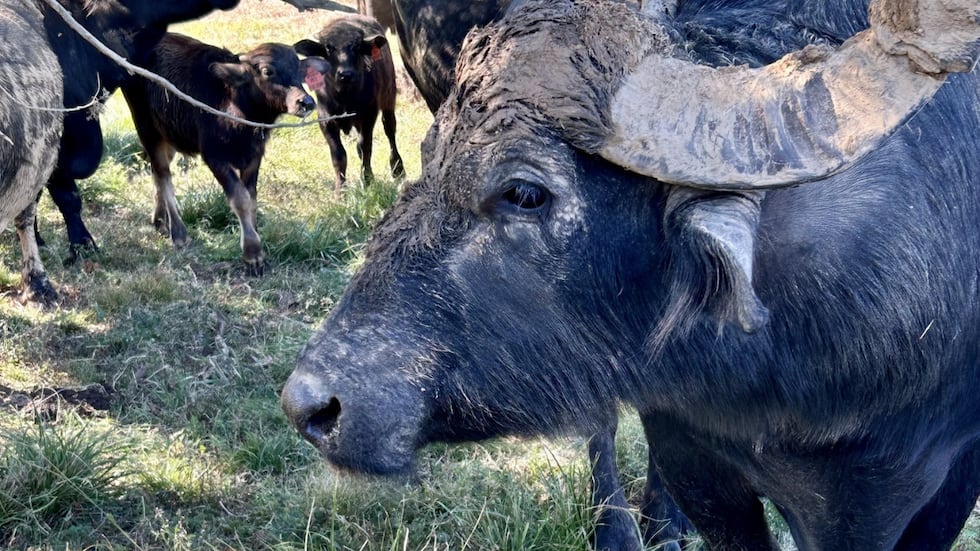
Sarah Roland raises 39 water buffalo on family land using earth-friendly farming methods
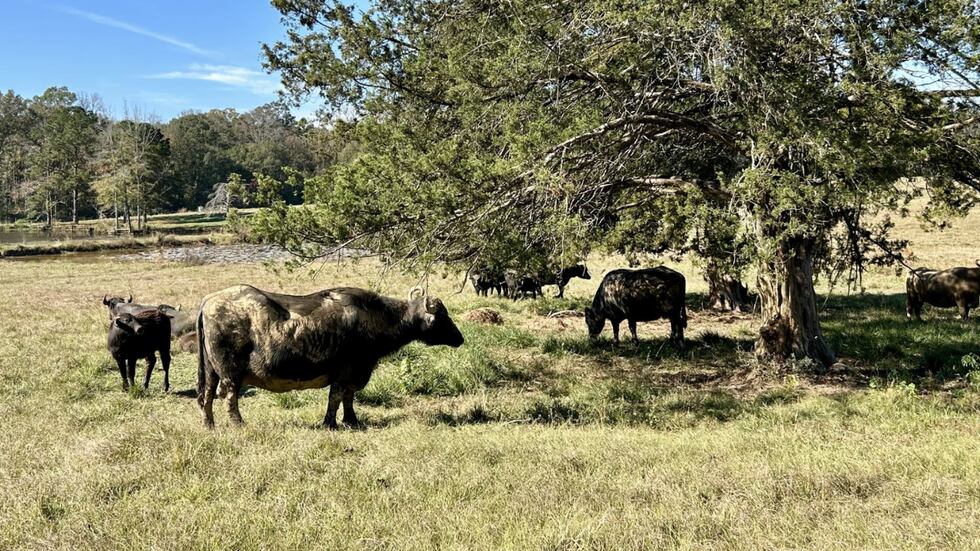
ST. FRANCISVILLE, La. (InvestigateTV) - Not to be confused with the American bison, water buffalo are the largest of the world’s bovines.
They have long helped humans till fields and still serve as a primary source of milk in Asia. But there’s only a handful of farms in the United States that cater to these animals.
One such farm sits just north of Baton Rouge, Louisiana.
Sarah Roland delays her Saturday chores to show visitors around her farm near St. Francisville, but they’re not here to see the cow.
When they learn what she raises here, they all have the same question. Why?
“Everybody always wants to know that,” Roland said. “I think we run around in the world trying to answer that, we’ll waste our whole lives.”
Roland has spent the past five years raising 39 water buffalo at Bayou Sarah Farms. She moved back home from California, bought her first five buffalo and moved them onto family land.
“The whim part was the water buffalo,” Roland said. “I was originally going to have a goat dairy. While I was working on a goat dairy, met the water buffalo and just fell in love with how they are.”
Sustainable farming methods
Roland runs the farm using sustainable methods.
The buffalo eat the grass, then fertilize the pasture. Her hens and their mobile hen-house help. She uses no pesticides, fertilizers or antibiotics.
“We’re producing a product and we’re going to do whatever it takes to keep that product coming. We’re seeing it as a whole living organism – the whole place,” Roland said.
The farm operates as a complete ecosystem, from the one-ton bull and his cows to the microbes in the soil that keep the grass healthy.
“If we’re not protecting the soil and protecting the earth that is giving us life, we’re not going to live here very long,” Roland said.
Products and education
To help offset the cost of earth-friendly farming, Roland sells water buffalo milk, butter, gelato and meat at Audubon Market in St. Francisville and through the Bayou Sarah Farms website.
“It’s slightly more sweet than beef, but not gamey at all, and has a lot more vitamins and minerals than beef,” Roland said.
She also hosts farm-to-table brunches and dinners at the farm. All of the food is grown on her farm.
She invites visitors to learn about her methods.
“Just like when I’m making a garden, I never put pesticides or anything like that in it, because you know it can’t be good for you. And that’s what she’s showing what it does to the ecosystem,” said Bryan LeBlanc, a visitor.
Nicole Wasserman, another visitor, said the farm offers hope.
“To be able to see what she’s able to do. She’s a one-man-band, and the impact she’s able to have is, it’s impressive,” Wasserman said.
Roland considers herself a steward of the animals and land rather than a farmer.
“They are family for me. They’ve taught me so much. How to slow down. How to breathe. How to be present. We live in a life that’s so immediate and so distracted and always in a hurry,” Roland said. “I’m really really grateful for all the lessons they teach me.”
Copyright 2026 Gray Media Group, Inc. All rights reserved.